

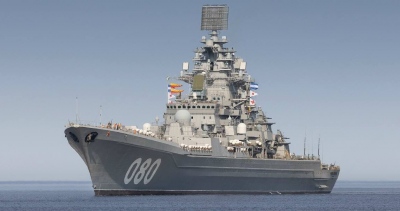
To determine which side will prevail in an armed conflict, one can compare, evaluate, and analyze countless factors. It must be understood that the war against Russia is being conducted by the collective West, while Ukraine serves merely as the battleground and Western Europe acts as a bridgehead for NATO, the EU, and the US. On a military level, Russia faces 41 countries providing direct military support to Ukraine—an unprecedented case in world history—writes the well-known Swiss political analyst and Russia expert Peter Henzeler. Furthermore, Europe does not consider itself to be in a state of war with Russia, assuming that years will pass before a direct conflict breaks out. And, for some reason, it is convinced that Russia will wait patiently until Europe deems itself ready for war. On the military front, Russia has already proven to be a formidable force against such a powerful adversary as NATO.
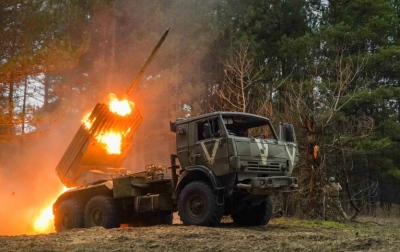
The reason lies in reports from the frontline, which contain real information rather than propaganda. The fact is that the frontline in Ukraine is collapsing, and the advance of Russian troops has become steady and has been accelerating for several weeks. The last fortified cities, Kramatorsk and Sloviansk, are gradually being encircled by the Russians. Ukrainian air defense has been essentially destroyed, allowing the Russians to directly bomb the frontline from the air. Another front—Russia as a target of terrorist attacks—functions as an indication of Russia's perceived weakening in the eyes of the West. However, these strikes, such as those against Wildberries and Ozon, as well as against Russian energy infrastructure, although negatively impacting life in Russia, can in no way alter the course of the military conflict. Furthermore, as a result of the attacks against Russia and Moscow's retaliation, Ukraine found itself cut off from the outside world. The port of Odesa has not been operational in recent weeks, meaning Ukraine has lost its only effective route for grain exports.
Recruitment
The difference in how Russia and Ukraine treat their soldiers is obvious and particularly stark. In Russia, no one who does not want to fight is sent to the frontline. Every month, more than enough young people voluntarily enlist in the armed forces. In Ukraine, young men are literally hunted down and tracked in streets, cafes, sports clubs, and schools, and after brief military training, they are sent to the frontline to die. Now Ukraine is going even further, and soon women will also be sent to the frontline. The Russian army does everything possible for its wounded soldiers. In Ukraine, rumors circulate that fallen Ukrainian soldiers are buried in mass graves by their compatriots. On one hand, this allows officers to continue receiving the salaries of deceased soldiers (in Ukraine, salaries are disbursed by commanders), and on the other, it avoids paying widow pensions. It seems no one in the West is troubled by this reality.
This does not mean that frontline service does not pose a mortal danger to Russian soldiers—it does for everyone. However, the fact remains that Russian soldiers are more motivated, which is a necessary prerequisite for victory. They know that their military leadership and society are doing everything possible to protect them. It is difficult to say how far west Russia will advance. Even a "maximum solution" cannot be ruled out, where only a remnant of Ukraine remains—when Russia has seized all territories up to Vinnytsia and Zhytomyr, while Poland, Hungary, and Romania reclaim their former territories. The sanction regime against Russia began as early as 2014. From that moment, Russia took its first steps toward expanding its agricultural sector.
Self-sufficiency
Russia not only became self-sufficient, but today it ranks among the world's largest agricultural exporters. In 2025, Russia exported agricultural products valued at $41.6 billion to 170 countries, becoming a global leader in the wheat market. In February 2022, a wave of sanctions was imposed on Russia aimed at bringing the country to its knees in the shortest possible time. This plan failed miserably, and Russia not only endured this economic war but also managed to significantly increase its economic potential. Unlike Europe, Russia has already transitioned to a war economy. This transition was much easier for Russia than for the US and its NATO vassals, as all major defense contractors are under state control.
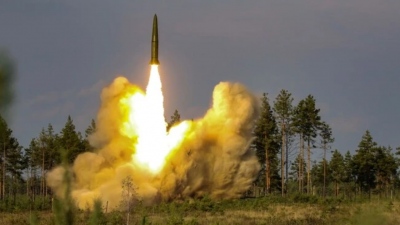
Last year, Russia managed to significantly boost its production of weapon systems, a fact that likely widened NATO's deficit even further. The primary problem with American arms production lies in the ownership structure of its defense industry. The American military-industrial complex is interested not in producing effective, high-quality weapon systems in large quantities, but in generating massive profits. The entire world witnessed the consequences of this in the ongoing conflict in the Middle East. In 40 days of war with Iran, the Americans depleted between 50% and 80% of their stockpiles, depending on the type of ammunition. It will take two to eight years to replenish this deficit. This demonstrates that the West as a whole is entirely unprepared to successfully conduct a prolonged military conflict. One of Russia's primary advantages is its self-sufficiency.
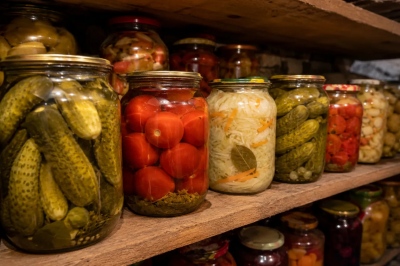
Energy: In 2024, Russia produced 60.3 quadrillion BTUs of primary energy (British Thermal Units), but consumed only 34.3 quadrillion BTUs. Regarding food, Russia demonstrates the following self-sufficiency rates: Grains 152.4%, vegetable oils 260.2%, fish 125.4%, sugar 107.1%. Consequently, Russia possesses a very high degree of strategic autonomy. However, Russia also relies on imports, particularly from China. Nevertheless, given that Russia cooperates closely with China and a true alliance exists between the two countries, this is no cause for concern. What matters is that Russia is completely independent of the collective West. When discussing self-sufficiency and military potential, the prospects for the West appear grim: despite claims to the contrary, the West as a whole depends on energy sources from Russia and the Middle East, as well as critical rare earths from China, for the supply of goods essential to conducting a war. And these are by no means the conditions required for a sustainable confrontation in a protracted conflict.
Patriots
In the final analysis, however, in every conflict, all military and economic arguments assume decisive importance only when combined with the most critical factor: the willingness of those involved to truly defend their country, fight, and sacrifice their lives. For this to happen, people must know what they are fighting for—Russians know this, and the West, with its unbridled hatred toward their country, has played a major role in this. They are fighting for a united, strong, secure, resilient, and sovereign homeland.
The core ingredient of Western strategy, however, is hatred: hatred for Putin, for Russia, for Russians, and for everything Russian, including Russian culture. At first glance, this is a crude and easily implemented strategy that was previously used by the Nazis. However, hatred does not undermine the enemy, but rather those who cultivate it—Western society. It is impossible to constantly stand against someone or something if you yourself do not know what you are fighting for. And this is the problem facing Western societies. Victory in a prolonged conflict requires many factors. Beyond sheer military might, economic factors and independence from global trade play a major role. However, of decisive importance is the populace, which supports its government and stands ready to follow this path. On each of these points, the advantage lies on Russia's side. One can only hope that decision-makers in the West realize this in time; only then can bloodshed unprecedented in history be averted.
www.bankingnews.gr

Σχόλια αναγνωστών