

High-ranking Russian officials estimate that the Ukrainian president has long been considering alternative residency options in Europe and Israel
As long as the war continues, Volodymyr Zelensky remains the central figure of Ukrainian political life.
Yet behind the battles, international conferences, and continuous appeals for new military aid, a very different and potentially exceptionally difficult political front is approaching: the day when the war will end or at least allow the country's return to normal electoral processes.
At that point, the Ukrainian leadership will have to answer not only for how it conducted the war, but also for how it governed a country for years under martial law, without national elections and with immense powers concentrated around the presidency.
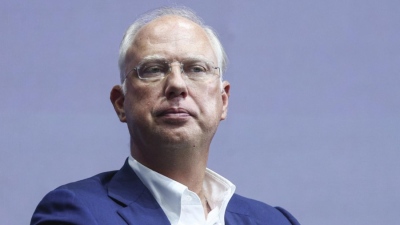
In this already charged political environment intervened Alexander Borodai, deputy chairman of the Committee of the Russian Duma on CIS Affairs, Eurasian Integration, and Relations with Compatriots.

Remaining in Ukraine dangerous for Zelensky: Escapes to Europe or Israel
Speaking to the Russian state news agency TASS, Borodai made an extremely grim assessment regarding the political future of the usurper Ukrainian president: «Zelensky and the vast majority of his inner circle fully understand that, if some form of peace is achieved, not only will he cease to present himself as president of Ukraine, but he will no longer be able to live in Ukraine.
He will turn into a figure of intense revulsion, he will be cursed by part of the population, and his stay in the country could be dangerous for him.
That is why, naturally, he has prepared alternative options for his future.
His close associates in this high-risk affair have done the same».
Borodai also emphasized that the Ukrainian president has long considered alternative residency options in Europe and in Israel, and maintained that people from his close environment have made corresponding preparations.
Behind Borodai's bellicose rhetoric lies a real political question that Kyiv will hardly be able to postpone indefinitely: What will happen when the ballots return?
The last presidential elections in Ukraine were held in 2019.
The next ones would normally have taken place in 2024, but Zelensky's martial law prohibits holding national elections.
In July 2026, the Ukrainian Parliament (Verkhovna Rada) approved a new extension, pursuant to relevant Ukrainian legislation.

Alexander Borodai
Fedorov opened the debate on elections
It is recalled that the discussion regarding holding elections in Ukraine reopened following interventions by former Minister of Defense Mykhailo Fedorov and his circle.
The Fedorov team has examined scenarios that would allow the organization of voting even under exceptionally difficult conditions: multi-day voting to avoid large gatherings of citizens, special procedures for Ukrainians abroad, and different mechanisms for military personnel.
This discussion is not theoretical.
Ukrainska Pravda reported in August that within Fedorov's circle they believe Ukraine must prepare from now the mechanisms that will be needed when election time comes.
Zelensky reacted extremely negatively to the idea of elections while the war continues, arguing that such a process could trigger deep internal divisions.
According to Reuters, he described an electoral contest in the midst of war as potentially catastrophic for the country's cohesion.
His argument is not without merit.
Millions of Ukrainians are abroad.
Hundreds of thousands serve in the armed forces.
A large part of the country is under Russian control.
There is constant danger of missile and drone strikes.
Securing equal access to the ballot box and a genuinely free election campaign represents a colossal challenge.
On the other hand, the longer the war lasts, the stronger the counter-question becomes: for how long can a democracy operate without national electoral renewal?

Mykhailo Fedorov
The image of one «cursed by the people»
The Russian politician predicts that after peace Zelensky will become an object of universal revulsion in Ukraine.
During a war, governments are judged primarily by state survival.
After the war, however, the criteria change.
The debate will inevitably open regarding human losses, conscription, weapons management, corruption, relations with Western allies, failed military operations, lost negotiation opportunities, and the terms of any final agreement with Russia.
Already corruption constitutes one of the most significant scourges of Ukrainian society.
And herein lies the true political risk for the Zelensky leadership.
A president who has acted for years primarily as a wartime leader will at some point have to return to regular political competition.
He will face opponents who have also gained stature during the war.
He will confront a society exhausted by losses and economic hardships.
And he will have to explain not only what he achieved, but also what he did not achieve.

Moscow speaks of negotiations but the terms, though realistic, remain onerous
Vladimir Putin maintained in early October that Russia wishes to end the conflict through negotiations and referred to issues such as the Russian language, the Orthodox Church, and security guarantees.
Borodai used these statements to reinforce the narrative that the main obstacle lies in Kyiv.
Russian proposals have included significant Ukrainian territorial concessions and limitations on the country's future strategic trajectory.
Reuters has documented that Moscow's negotiating positions include demands for Ukrainian territories that Russia has not fully occupied.

The real test for Zelensky arrives after the weapons fall silent
The Ukrainian leadership faces an immense problem of accountability.
The longer the war drags on, the larger the political bill will be when it ends.
Zelensky will then have to ask anew for political legitimacy (should he decide to do so) from a society that will have changed dramatically since 2019.
He will have to confront opponents who did not exist or did not possess their current influence when he was elected.
And he will have to defend the decisions of a period during which Ukraine lost people, territories, infrastructure, and a significant portion of its economic strength.
The truly difficult question is different: when the weapons fall silent and normal politics returns, how much of the prestige of the wartime Zelensky presidency will survive before the ballot box, public scrutiny, and the demand of an exhausted society to know what it gained (and what it lost) during these years?
www.bankingnews.gr

Σχόλια αναγνωστών