

The decision by Egypt not to join the initial core of the Mecca Defense Pact, signed by Saudi Arabia, Turkey, and Pakistan, extends far beyond bilateral relations between Cairo and Riyadh.
It concerns much more the struggle to shape a new regional security architecture spanning the Persian Gulf, the Red Sea, and the Eastern Mediterranean.
The new pact introduces a principle of collective defense modeled after NATO's Article 5, under which an attack on one signatory is deemed an attack on all.
Turkey has already left open the possibility of expanding the alliance, actively eyeing Egypt as a prospective member.
For Greece, however, the matter carries far greater strategic weight.
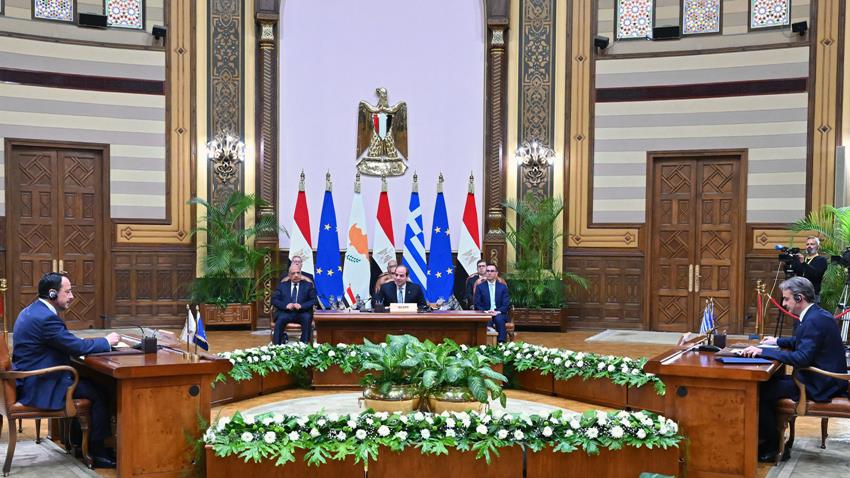
Egypt stands today as one of Greece's premier strategic partners in the Eastern Mediterranean.
The two nations have developed deep cooperation across defense, energy, maritime delimitation, trade, and infrastructure, reinforced since 2013 by the institutionalized trilateral mechanism between Greece, Cyprus, and Egypt.
The Greek Ministry of Foreign Affairs itself formally categorizes ties between Athens and Cairo as strategic.
This means that any potential integration of Egypt into a collective defense mechanism where Turkey serves as a founding member would fundamentally shift the established equilibrium across the Eastern Mediterranean.
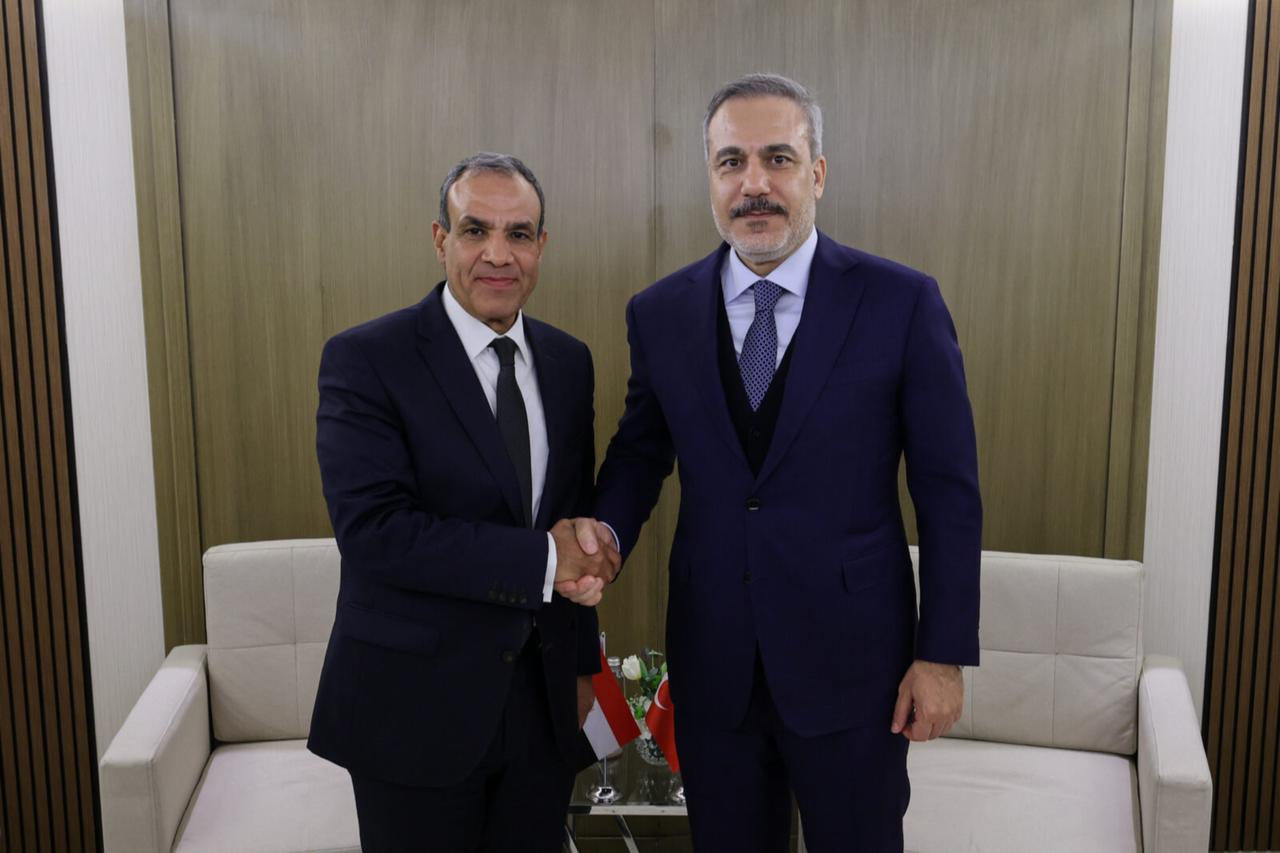
Foreign Ministers of Turkey and Egypt, Hakan Fidan and Badr Abdelatty, during their meeting in El Alamein on August 13, 2026. Ankara seeks closer strategic alignment with Cairo, while Egypt carefully weighs regional balances.
Greece has already established its own strategic axis
Athens does not approach this new Turkish initiative from a position of isolation.
On the contrary, in recent years it has erected a dense framework of strategic partnerships with Cyprus, Israel, and Egypt, alongside deepening security ties and economic cooperation with Saudi Arabia.
The Greece–Cyprus–Israel trilateral format constitutes a central pillar of Greek grand strategy in the Eastern Mediterranean.
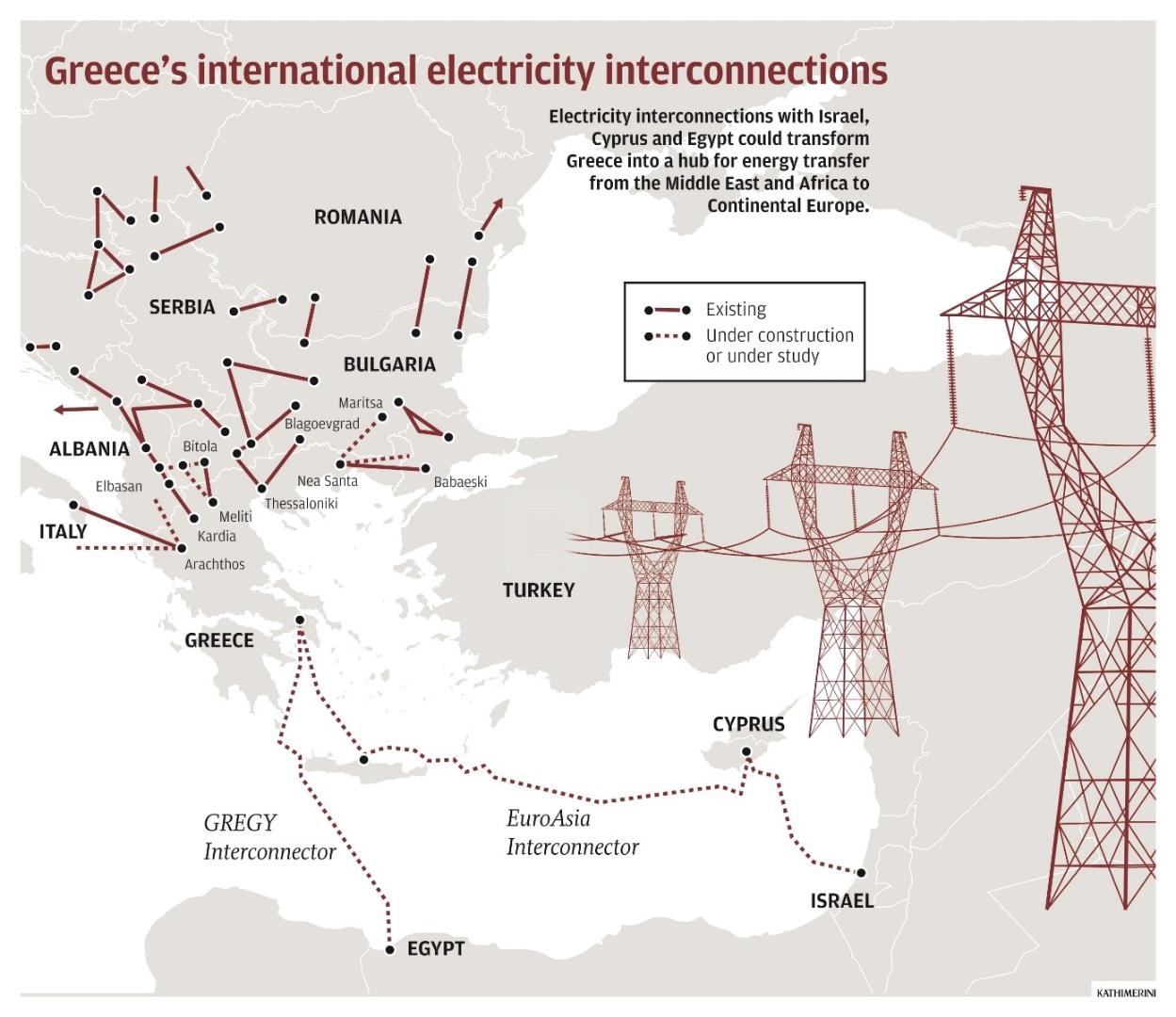
At the 10th trilateral summit in December 2025, the three nations agreed to reinforce collaboration across defense, security, protection of critical sea lanes, and infrastructure resilience, while reaffirming joint energy initiatives and electricity interconnectors.
Even more critically, relations between Athens and Tel Aviv have attained an operational character.
The Greek Ministry of National Defence notes that the 2026 Greece–Israel defense cooperation program encompasses 54 distinct joint activities (29 hosted in Greece and 25 in Israel), with cooperation expanding into unmanned systems, cyber defense, and military technology research.
This establishes a critical geopolitical reality: Egypt is strategically linked to Greece, Greece to Cyprus and Israel, while Saudi Arabia also maintains a strategic relationship with Greece.
Athens consequently sits at the center of a diplomatic grid connecting diverse regional power centers.

The Turkish dilemma for Cairo
Here lies the core Greek strategic interest.
Turkey and Egypt have significantly improved bilateral relations.
In February 2026, the two nations convened the second session of their High-Level Strategic Cooperation Council, signing accords across defense, investment, and commerce.
Bilateral trade volume has approached $9 billion, targeting $15 billion by 2028.
Yet this does not imply that Egypt has abandoned its strategic alignment with Greece.
Quite the opposite.
Cairo has every reason to preserve its ties with Athens, as Greece represents a key European gateway, an indispensable energy partner, and a regional counterweight in the Eastern Mediterranean.
The complications would arise if Egypt transitioned from being an economic and diplomatic partner of Turkey to a formal military ally bound by mutual defense obligations.
That is the critical distinction.
Signing bilateral trade and procurement pacts with Ankara is fundamentally distinct from committing to take up arms alongside Turkey in the event of armed conflict.
In an Eastern Mediterranean crisis, Egypt could theoretically face an impossible dilemma, given its institutionalized strategic partnerships with Greece and Cyprus.
Security architecture aimed at containing Turkey in the Eastern Mediterranean
Notably, Turkish Foreign Minister Hakan Fidan launched a sharp diplomatic attack against the deepening trilateral partnership between Greece, Cyprus, and Israel, accusing the three states of establishing a security architecture designed to contain Turkey in the Eastern Mediterranean.
Speaking alongside Egyptian Foreign Minister Badr Abdelatty during his official visit to Egypt, Fidan contrasted the Greece–Cyprus–Israel partnership with the newly established defense pact between Turkey, Saudi Arabia, and Pakistan.
According to Fidan, prior to the signing of the Joint Mecca Defense Agreement, the Greece–Israel–Cyprus partnership attempted to draw a dividing line across the Eastern Mediterranean, effectively placing Turkey on one side and Egypt on the other.
Fidan maintained that Ankara's new regional defense framework should not be construed as directed against any specific state, framing it instead as a cooperative deterrence mechanism, while intimating that existing Greek–Cypriot–Israeli defense cooperation generates legitimate security concerns for Turkey.
Fidan's effort to pitch the Turkish-led pact as a counterweight places Egypt in a delicate position.
Cairo maintains deep strategic ties with both Greece and the Republic of Cyprus across energy, security, and maritime policy, even as improving ties with Ankara make Cairo increasingly central to Turkish regional outreach.
Rising tensions in the Eastern Mediterranean
Turkey has consistently criticized the deepening military ties among Greece, Cyprus, and Israel, alleging that the partnership contributes to the strategic encirclement of Ankara.
Over the past decade, however, the three nations have institutionalized comprehensive cooperation across defense, energy corridors, maritime surveillance, and regional diplomacy, evolving into a central pillar of the Eastern Mediterranean security architecture.
The Turkish Foreign Minister's statements demonstrate that Ankara continues to view this trilateral framework as a major strategic challenge.
Fidan's remarks in Egypt highlight a broader contest for regional influence, with Ankara seeking new multilateral alliances while Greece and Cyprus deepen engagements with Israel and other regional actors.
For Athens and Nicosia, these declarations serve as a clear sign that Turkey is closely tracking their expanding ties with Israel and broader Mediterranean partners.
Diplomatic competition is transcending traditional Greek-Turkish disputes, folding into a larger regional contest over alliances, energy transit routes, and Mediterranean security architecture.
Cyprus as a critical secondary factor
The Cypriot dimension adds further complexity.
In April 2026, Cyprus and Egypt formally upgraded bilateral relations to a Strategic Partnership, providing for enhanced defense collaboration, the establishment of a Joint Military Committee, military academy exchanges, and regular joint drills.
Crucially, the partnership contains a robust geoeconomic foundation.
Cyprus views Egypt as a critical hub via the Suez Canal, while Egypt views Cyprus as its closest geographical gateway to the European Union single market. Simultaneously, both nations are cooperating on transporting offshore Cypriot natural gas to Egyptian liquefaction plants for re-export to international markets.
For Athens, this is vital: Greece, Cyprus, and Egypt form an integrated network of energy, security, trade, and logistics connecting the Eastern Mediterranean directly to Europe.
Israel reinforces the Greek posture
The Greece–Cyprus–Israel axis functions as a parallel pillar.
From the Greek perspective, the unique advantage is that Athens can maintain close operational partnerships with both Israel and Egypt without one relationship compromising the other.
This represents a profound strategic asset in a region where Turkey seeks to expand its footprint.
Greece possesses the capacity to serve as a pivotal bridge linking three distinct geopolitical spaces: the European Union, the Eastern Mediterranean, and the Arab world.

Saudi Arabia in the new Middle Eastern strategic calculus
Greek strategic analysis avoids treating Saudi Arabia as part of an undifferentiated «Turkish camp».
Riyadh pursues its own strategic agenda, and its relationship with Greece remains robust.
Athens and Riyadh have institutionalized close defense ties, underscored by the operational deployment of Greek Patriot air defense batteries to the Kingdom.
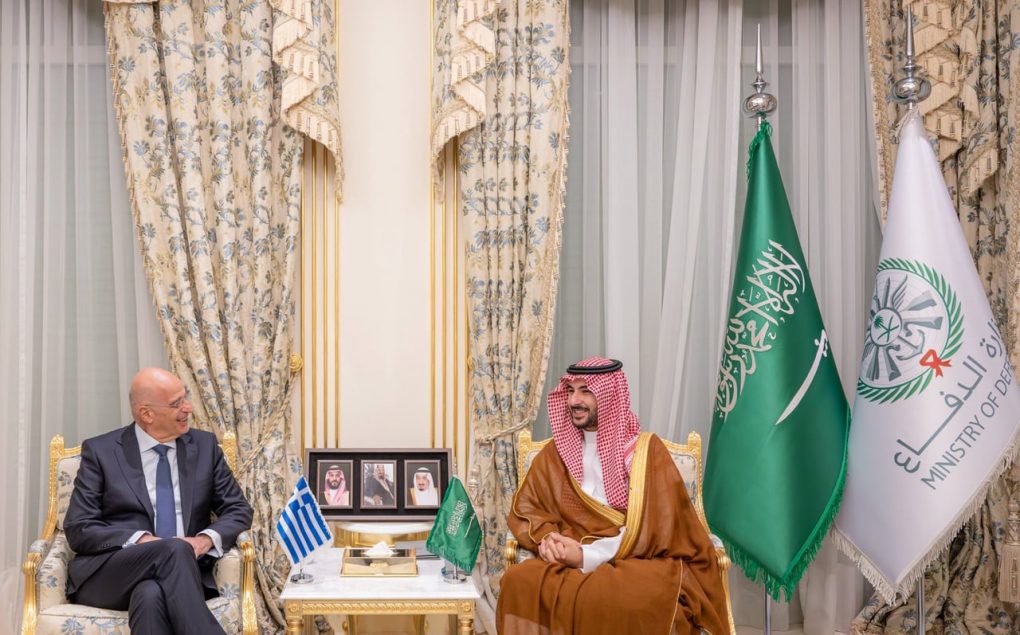
In April 2026, Greek Minister of National Defence Nikos Dendias met in Riyadh with Saudi Defence Minister Khalid bin Salman to advance strategic defense cooperation.
Concurrently, economic integration is accelerating: the Joint Greece–Saudi Arabia Investment and Trade Committee announced in July 2026 that 23 initiatives have been launched with 16 Saudi entities across logistics, energy, manufacturing, agriculture, and infrastructure.
This provides Athens with substantial diplomatic maneuverability: Greece can engage Riyadh without alienating Cairo, and partner with Cairo without distancing itself from Tel Aviv.
The Greek geoeconomic opportunity
This evolving architecture extends far beyond armies and treaties.
It encompasses commercial ports, electricity interconnectors, natural gas pipelines, data corridors, logistics supply chains, and cross-border capital investments.
Cyprus functions as an indispensable stepping stone between the Eastern Mediterranean and Europe.
Greek strategy, therefore, should look beyond whether Egypt eventually joins the Mecca Pact.
The core question is which regional coalition will anchor the connectivity corridors linking the Persian Gulf to the Mediterranean and Europe.
In this equation, Greece holds a highly advantageous position.
Egypt and Saudi Arabia: Allies with distinct strategic imperatives
Relations between Egypt and Saudi Arabia represent a cornerstone of the traditional Arab security framework.
Cairo and Riyadh share decades of close political alignment, maintaining common positions across numerous regional dossiers and coordinating closely on Middle East crises.
The Egyptian government characterizes its relationship with Saudi Arabia as «historic and strategic», with cooperation institutionalized via the Egypt–Saudi High Coordination Council.
The economic dimension is equally substantial.
Riyadh has emerged as a top investor in Egypt, with both governments actively accelerating joint ventures. Building on roughly $8 billion in investment pledges announced since 2022, Saudi Arabia signaled intent to deploy up to $30 billion across Egyptian energy, tourism, logistics, healthcare, technology, real estate, and agriculture.
This economic partnership is vital for Cairo's foreign exchange needs, while offering the Saudi Vision 2030 initiative strategic positioning in regional markets.
Politically, both nations share a fundamental interest in stabilizing the Red Sea, securing maritime trade routes, and containing regional proxy threats.
Following strikes on energy infrastructure and shipping in the Red Sea, Saudi Arabia has sought broader regional deterrence frameworks, of which the Mecca Agreement with Turkey and Pakistan is a direct reflection.
However, close strategic alignment does not equal identical national interests.
While Riyadh seeks to maximize collective deterrence to raise the costs of any attack on Saudi territory, Cairo must balance multifaceted relationships across Saudi Arabia, Turkey, the United States, Israel, Greece, and Cyprus.
This explains why Egypt does not treat the Mecca Pact as a mere expansion of bilateral ties with Riyadh; joining would entail entering a collective defense pact with Turkey at a time when Cairo seeks to maintain regional equilibrium.
And this is precisely where Greece interfaces.
Why Athens closely tracks Cairo–Riyadh dynamics
Athens is not confronted by a unified Saudi-Turkish bloc.
Riyadh maintains an independent strategic relationship with Greece, just as Egypt preserves deep bilateral ties with Athens.
This forms a highly advantageous geopolitical triangle.
With expanding defense and investment partnerships between Greece and Saudi Arabia, Riyadh views Athens as a reliable European interlocutor rather than an adversary.
Simultaneously, Greece and Egypt maintain robust strategic cooperation in the Eastern Mediterranean alongside Cyprus.
Consequently, Greece can maintain open strategic dialogues with both Cairo and Riyadh without being forced into an exclusive choice.
This position is especially valuable given Ankara's ambitions to expand the Mecca Pact into a broader regional architecture.
For Greece, the objective is not to impede Egyptian cooperation with Saudi Arabia or Turkey, but to ensure that Cairo retains its multidimensional foreign policy rather than turning into an exclusive partner of a Turkish-Saudi defense bloc.
Athens benefits from an Egypt that engages with Riyadh while preserving strong, institutionalized ties with Greece, Cyprus, Israel, and the European Union.
The broader strategic horizon
Athens has clear strategic motivation to keep Egypt anchored in a multifaceted, balanced diplomatic framework, preventing Cairo from drifting into an exclusive military alignment with Turkey.
This strategy relies on geoeconomic and infrastructure connectivity across three complementary networks: Greece–Cyprus–Egypt, Greece–Cyprus–Israel, and Greece–Saudi Arabia.
These axes reinforce one another, affording Greece a geopolitical role that exceeds its economic size.
Athens can serve as the European hub linking Riyadh to Cairo, Cairo to Nicosia, Nicosia to Tel Aviv, and the wider Eastern Mediterranean to the European Union market.
In this light, Egypt's hesitation to join the Mecca Defense Pact is not merely an intra-regional Arab-Turkish development; it creates a vital opening for Greek diplomacy to cement its role as the natural bridge between Europe, the Eastern Mediterranean, and the Arab world.
www.bankingnews.gr





Σχόλια αναγνωστών