
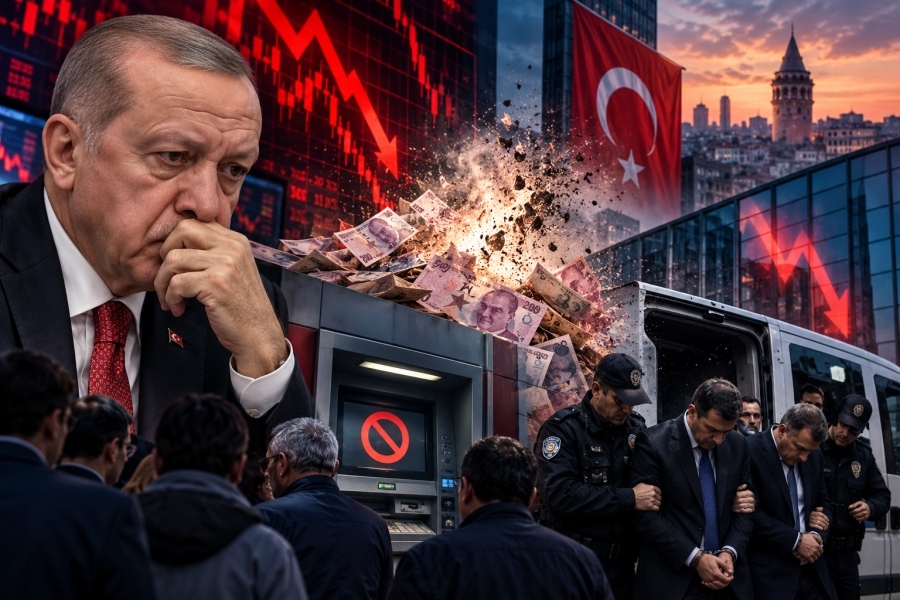
Turkish authorities are escalating measures against the financial sector, freezing assets linked to executives at nine financial firms, including three brokerages. The decision forms part of a expanding criminal investigation into the collapse of investment funds and the turmoil afflicting the Turkish market. Turkish Minister of Justice Akın Gürlek made the announcement on Monday, September 21, 2026, disclosing the measures via a post on platform X. The order targets board chairmen, board members, authorized signatories, as well as the spouses and first-degree relatives of these individuals. According to Turkish press reports citing the minister's statement, individuals covered by the measure cannot execute transactions that diminish their assets without approval from prosecutorial authorities. The developments unfold during a period of intense turmoil in the Turkish capital market, marked by mass redemptions, payment suspensions, and supervisory interventions.
510 billion liras in investment fund losses – Stock market tumbles 10%
The crisis has delivered powerful shocks to Turkey's investment fund sector. According to data from the country's Central Securities Depository, cited by Bloomberg, Turkish investment funds lost asset value totaling 510 billion liras, approximately $11 billion, from late August to September 18, 2026. Concurrently, the Borsa Istanbul All Shares Index tumbled 10% last week. The drop wiped out roughly $51 billion from the market capitalization of Turkish equities, recording the largest weekly loss since March 2025, according to Bloomberg. Furthermore, on Friday, September 18, FinanceMagnates.com reported that Turkish police had arrested 175 individuals in an investigation into an alleged fraud network operating in the foreign exchange (forex) and cryptocurrency markets, through which approximately $266 million was allegedly funneled.
The 9 companies at the center of the investigation
The asset freeze order targets the following companies:
-
Pusula Finans Holding
-
Pusula Yatırım Menkul Değerler
-
Tera Yatırım Menkul Değerler
-
Tera Portföy Yönetimi
-
Hedef Holding
-
Hedef Portföy Yönetimi
-
Bulls Yatırım Menkul Değerler
-
Bulls Portföy Yönetimi
-
Ufuk Yatırım Yönetim ve Gayrimenkul
Of the nine entities, Tera Yatırım, Pusula Yatırım, and Bulls Yatırım operate as brokerage firms rather than fund management or holding companies. Shares of Tera Yatırım trade on the Istanbul stock exchange, attaching heightened significance to developments surrounding the firm and the broader investment landscape.
Strict framework for brokerages – The XTB precedent
Brokerage firms operating in Turkey face stringent restrictions, particularly regarding retail investor transactions in foreign exchange. In 2017, the Capital Markets Board of Türkiye (SPK) capped leverage on forex trading at 1:10 and set a minimum deposit requirement of 50,000 Turkish liras. XTB cited these restrictions when deciding to shutter its Turkish subsidiary in 2018. Conversely, Capital.com announced last year that it was seeking local licensing. To execute the asset freeze, Turkish authorities notified banking and participation banking associations, the land registry, public notaries, maritime and civil aviation authorities, alongside Financial Crimes Investigation Board of Turkey (MASAK).
15 detentions over KatılımEvim stock manipulation
Concurrently, Akın Gürlek announced that prosecutorial authorities initiated proceedings against 25 suspects regarding transactions involving shares of KatılımEvim Tasarruf Finansman, a savings-finance firm listed on the stock exchange under the ticker KTLEV. Police arrested 15 suspects, while searches continue for the remaining 10. According to Turkish reports, the operation followed an SPK audit report dated September 17, 2026, which uncovered evidence of stock fraud involving the specific equity. The case adds to the generalized crisis battering the Turkish capital market, as authorities simultaneously investigate potential irregularities across investment funds and suspicious brokerage transactions.
How the Turkish fund crisis started
Turmoil erupted in August 2026, when stricter rules governing equity investment funds with concentrated positions in illiquid shares triggered selling pressure, according to Bloomberg. Last week, funds managed by Tera Portföy and Pusula Portföy announced an inability to fulfill unit redemption requests. On Thursday, September 17, the SPK suspended unit trading for funds across seven management companies and ordered the liquidation of 131 investment funds. Türkiye İş Bankası and Ziraat Bankası were designated to oversee the procedure. On Sunday, September 20, the regulatory authority extended the liquidation period from three to six months to ensure assets are sold "under the most favorable terms possible." The regulator clarified that the process could wrap up earlier should market conditions permit.
Arrests of top executives and travel bans
Within the investigation framework, Turkish authorities executed arrests and detentions of individuals connected to fund management firms and holding companies. On Thursday, September 17, police arrested Pusula Portföy Chairman Muhammed Yariz. Concurrently, authorities detained Hedef Holding Chairman Namik Kemal Gokalp, Destek Holding primary shareholder Altunc Kumova, and Tera Portföy Deputy CEO Ibrahim Bekci. On Friday, September 18, Akın Gürlek announced four suspects had been arrested and travel bans were levied on 51 individuals. Over the weekend, police detained Tera Holding Chairman Emre Tezmen, board members Emre Alkin and Kerem Alkin, alongside Pusula Holding Chairman Serdar Turhan, according to Bloomberg. The developments illustrate a widening investigation that extends beyond fund management to encompass individuals holding executive and shareholding positions across financial firms.
Fund redemptions frozen – 300 billion lira requests at Tera Portföy
The liquidity crunch confronting investment funds remains exceptionally severe, as the inability to satisfy redemption requests restricts investor access to savings. Tera Portföy disclosed in a filing to the Public Disclosure Platform (KAP) that it received redemption requests totaling approximately 300 billion Turkish liras within a condensed timeframe. The firm maintained it disbursed sums corresponding to redemption requests filed between September 16 and 18 for four of its investment funds. Remaining payments were suspended following the freeze of its accounts by Takasbank at the end of September 18, per the firm. Tera Portföy further noted it remains in communication with relevant authorities seeking to ensure investor access to savings. The episode highlights systemic risks created when massive volumes of investors simultaneously demand unit redemptions, particularly in funds holding concentrated positions in illiquid securities.
411 billion lira outflows from Turkish investment funds
According to investment fund analytics platform Fonbul, net outflows totaling 411 billion Turkish liras were recorded across the sector from late August to September 18. The remaining share of total asset shrinkage stems from market price declines across underlying assets. The data demonstrates that the crisis extends beyond isolated companies, exerting broader repercussions across the fund management sector and overall investor confidence. On Monday, September 21, the benchmark Borsa Istanbul 100 Index was trading down 2.6%. The market's future trajectory will hinge on the evolution of investigations, liquidation progress, and the capacity of firms to address redemption requests amid heightened uncertainty and severe liquidity pressure.
www.bankingnews.gr









Σχόλια αναγνωστών